Building, Speed Testing and Paper Tuning a New Hunting Bow for Andrew Phillips
Episode: I Bought My Best friend His DREAM Whitetail Bow!
Watch on YouTube (opens in a new tab)The story
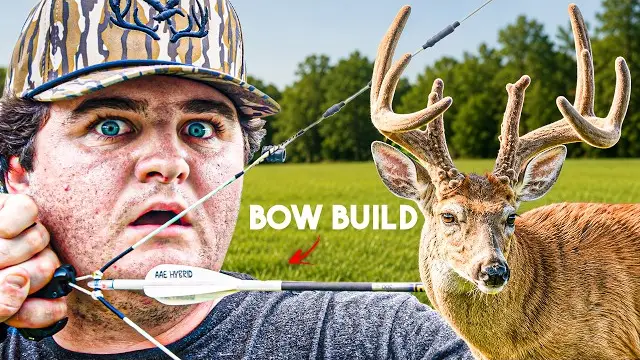
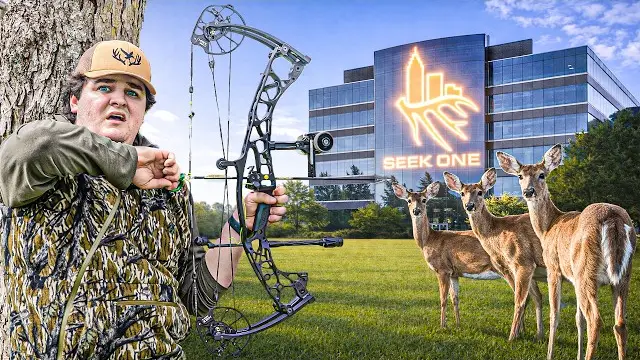
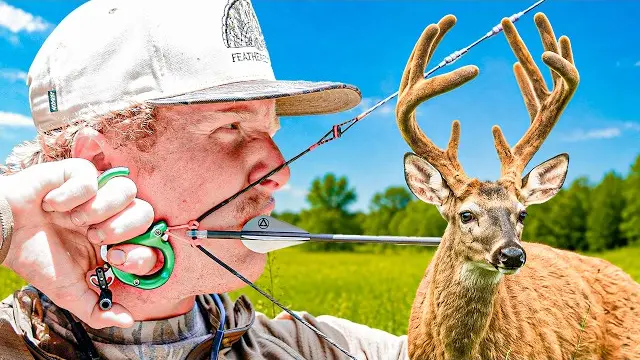
Andrew Phillips gets a new bow after Charlie talks him into it, and a bow tech walks him through the whole build: moving his accessories over, setting draw weight, a speed test against his old bow and a paper tune. It starts out as a budget build and doesn’t stay one, and it ends with a bullet hole through paper and the bow sighted in at 20 yards.
Andrew says Charlie talked him into the new bow and is paying half. The crew starts calling it the “flagship budget build.” Andrew’s stabilizer runs him $84, where a brand-new one is about $249.
Moving the accessories over
Draw length is measured and the accessories are laid out first. After that it’s unbolting everything from the old bow and bolting it onto the new one. The old bow also gets a rest and a D-loop at Andrew’s draw length and poundage, so the two bows can be compared head to head.
A new set of strings goes on, along with a free hat. Somewhere in there the budget build turns into something else. As Andrew puts it at the end, “I left with not a budget build.”
There’s also talk of a three-on-one match at the 3D range in town, the crew against the bow tech. One of them says he’d want about a week’s heads-up, since he doesn’t even have a sight tape on his bow yet.
How much can he pull?
At 75 pounds with the new strings, Andrew doesn’t want to try it. They drop it to 73 and he gets it back, but it’s a struggle. He admits he hasn’t drawn a bow or been to the gym since last year. They back it down again and settle at 66. His old bow was set at 53, so that’s more than a 10-pound jump. Andrew figures that if he shoots every day, he’ll build the strength to go up.
Old bow vs. new bow on the chronograph
At 53 pounds the old bow shoots 252, which the crew calls slow, even though they note deer used to get killed all the time at that speed. To make it fair, they turn the old bow up to 67 to match the new one. It still has its original cam. Cranked up, it reads about 270.
At the same draw and poundage, the new bow comes out 8 feet per second faster. That’s with a slower mod on the new cam. The tech says that without it, the bow would be in the 280s, around 282 or 283. Andrew says he could take it off once his form is down. Going up in poundage would do the same thing.
The sight and the paper tune
The new bow is built to take a sight that fits into the riser, but nobody ordered that mount. So the tech flips a universal mount, runs it flush against the bow and tightens the set screw into the wedge. He says it holds just fine.
Paper tuning comes next. After completely restringing the bow and taking the cams off, the tech gets a bullet hole himself. Andrew’s first shots tear nock left, then a little nock high, then left again. The bow isn’t the issue. Andrew is anchoring and gripping differently every shot.
The tech walks him through it. Anchor in the same spot every time, Andrew uses the corner of his nose, and feel the string lightly against the face. Relax the fingers on the grip so the bow seats between the muscles of the hand instead of pivoting against something hard. On the next shot Andrew puts it through for a bullet hole without a single change to the bow. Andrew says he didn’t know grip mattered. He thought you could hold a bow any way you wanted.
Sighted in and finished
With the peep matched to his anchor and locked in, the draw length, poundage and peep height are all set. The bow is sighted in at 20 yards. Andrew says his form felt a lot better, though keeping his elbow up still feels strange. The answer he gets: if it ever hurts, something isn’t right. Cameron is next in line for a new bow.
Links from the video description
FEATHEREDTINES MERCH featheredtines.com
USE CODE "FT10" FOR 10% OFF ALL BEEFCAKE JERKY PRODUCTS beefcakejerky.com/?utm_source=youtube&utm_medium=organic&utm_campaign=feathered-tines
TideWe Link to some awesome gear! tidewe.biz/FeatheredTines #hunting #archery #bowhunting #outdoors